I’ve started work on something new—and it’s taking me somewhere very different.
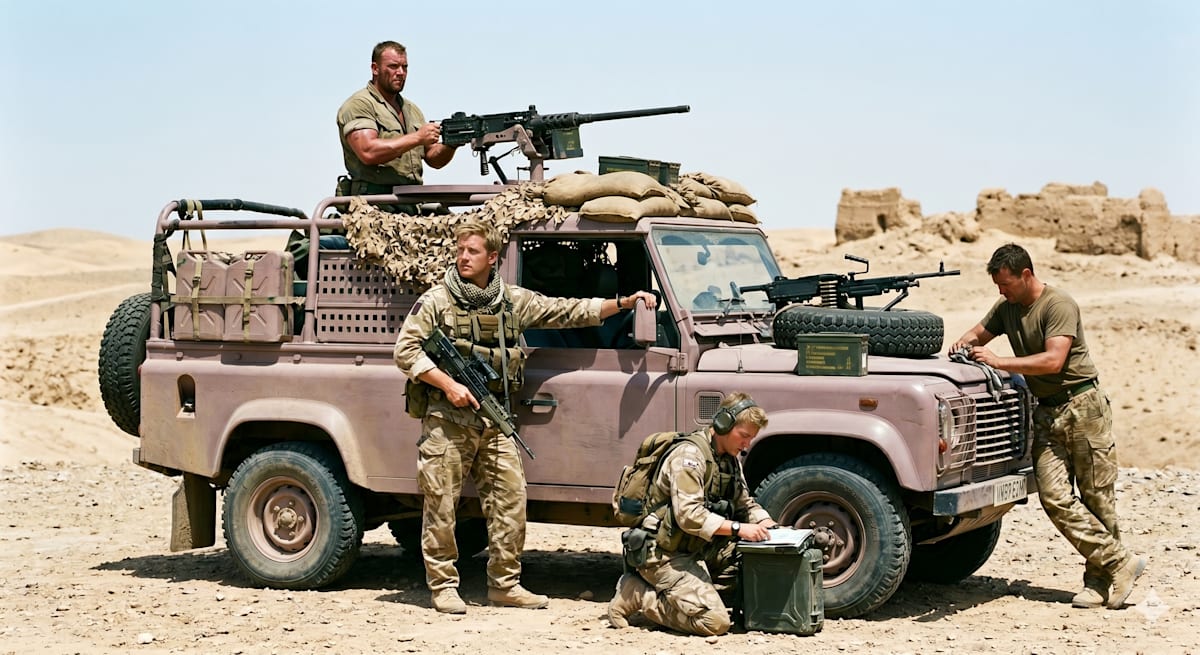
My next project is a military horror set during the 2003 invasion of Iraq, told from the perspective of Captain Declan Heyes, SAS, embedded within a Mobility Troop operating deep in and around Basra. It’s a story that’s been sitting in the back of my mind for a while, but I knew if I was going to write it, it had to feel real. Not just in the action, but in the atmosphere, the pressure, and the moral weight of the conflict itself.
To build that realism, I’ve been working from a mix of historical analysis and structured narrative research. Documents like Operation Telic and A Tale of Two Cities have been invaluable—not just for understanding what happened, but how it felt on the ground. The contrast between British and American tactics, especially around Basra and Fallujah, is something I’ve found particularly powerful. The British approach—more restrained, more cautious in urban environments—creates a very different kind of tension compared to the overwhelming force used elsewhere.
And tension is everything in horror.
What really stands out in the research isn’t just the fighting—it’s the strain. Equipment shortages. Communication breakdowns. Units stretched thin. Decisions being made in seconds that carry consequences for years. It’s a perfect foundation for horror, because the fear is already there before anything supernatural even enters the story.
Then you add the environment.
The Shamal sandstorms are something I keep coming back to. They don’t just limit visibility—they erase the world. Sound gets swallowed. Shapes move where they shouldn’t. You lose distance, direction, and sometimes even your sense of what’s real. It’s the kind of setting where something unnatural doesn’t feel out of place—it feels inevitable.
And that’s where this story really shifts.
At the heart of the book is something pulled from real Iraqi folklore—the Ghul, sometimes referred to as the Galla. I took a deep dive into the mythology behind it, because I didn’t want a generic creature. In its original form, the Ghul is a predator of ruins and graveyards, something that feeds on the dead and stalks the living. It doesn’t just attack—it lures, mimics, and deceives. It uses voices. It draws people into isolated spaces. It hunts with patience.
That makes it far more terrifying in a military setting.
Because the environments these soldiers are operating in—bombed-out compounds, collapsed buildings, abandoned urban zones—are exactly where something like this would thrive. The war doesn’t create the horror. It exposes it.
For Captain Declan Heyes and his Troop, this isn’t a clean fight. It’s not something they can outgun or outmanoeuvre. It’s something that learns them, studies them, and turns their own training and instincts against them. Add in the exhaustion, the pressure, and the constant uncertainty of operating in a warzone, and the line between tactical threat and something far worse starts to blur very quickly.
What I’m aiming for with this book is something grounded, tense, and deeply unsettling. A story where the horror grows out of reality rather than replacing it. Where the setting does as much damage as the enemy.
Because at its core, this isn’t just about war.
It’s about what’s waiting in the ruins once the fighting stops.
It’s early days, but this one feels different.
Darker. Slower. More psychological.
And honestly? The deeper I go into it, the more unsettling it becomes.